Automated Discovery
Assets aggregate from supported hardware, cloud, domain scanning and integrations. Reconciliation helps identify matches and conflicts; unresolved or stale records need review.
Build a live, governed asset register across hardware, software, cloud and service dependencies, with ownership and evidence attached from day one.

Spreadsheet-based asset registers drift immediately. Shadow IT goes untracked. Audit scope becomes impossible to determine.
Assets aggregate from supported hardware, cloud, domain scanning and integrations. Reconciliation helps identify matches and conflicts; unresolved or stale records need review.
Assign asset owners through reassignment workflows and approval chains, with an audit trail. Review unowned assets and exceptions rather than assuming every discovered record has an owner.
Track provisioning, changes, reviews, and decommissioning with timestamped evidence at every stage.
Structured evidence packs include lifecycle records, review history, and reconciliation events.
Explore the asset portfolio view within the Fig platform.
A tailored walkthrough lets you review the relevant workflows, supported connections and reporting before deciding whether Fig is right for your team.
See it in a demo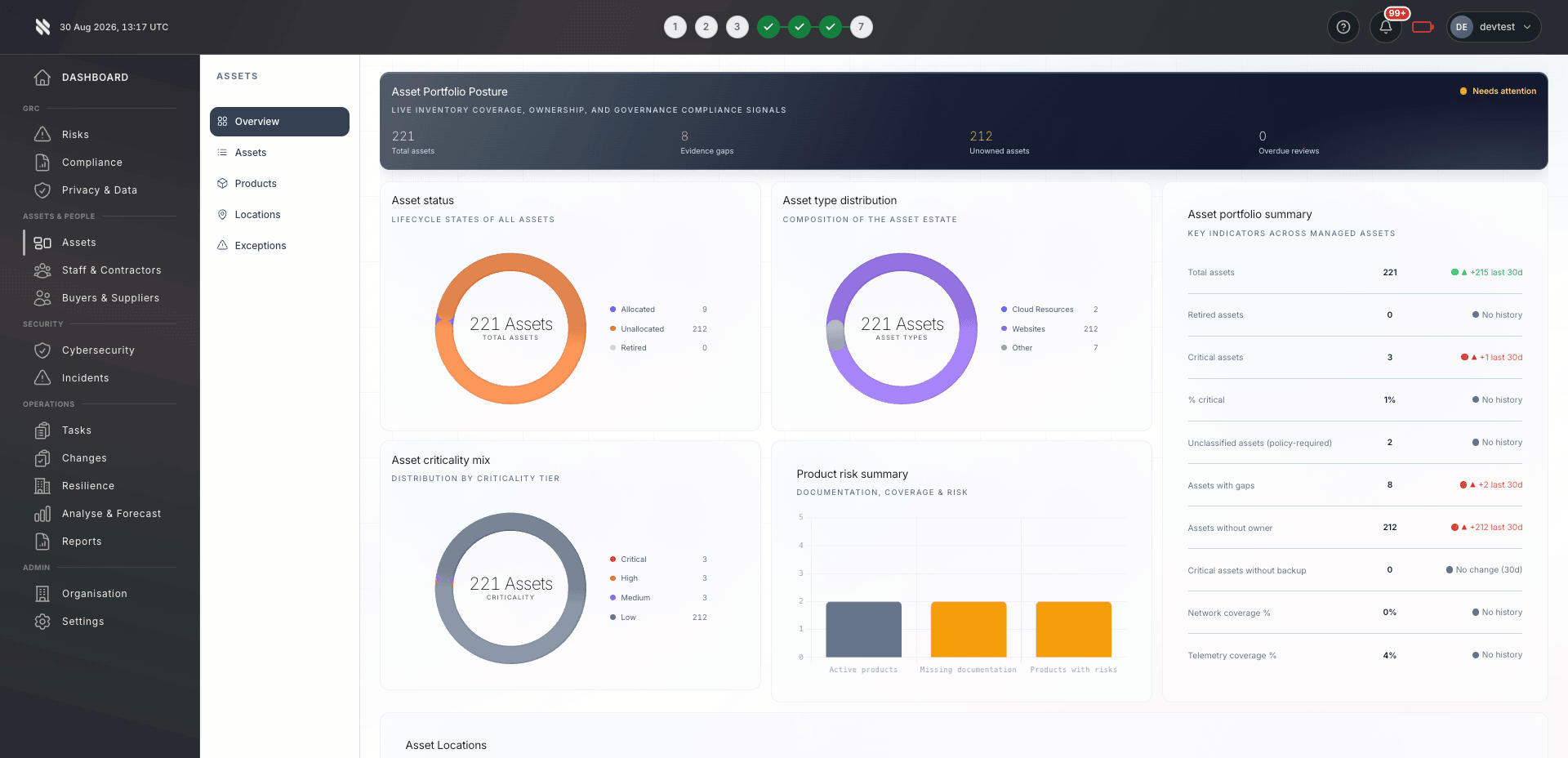
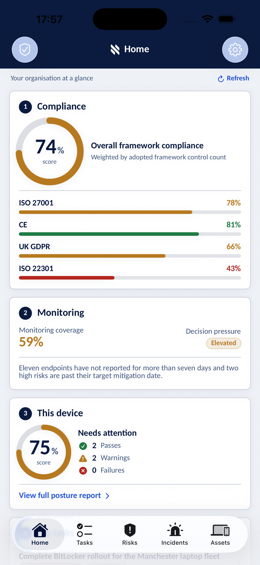
Bring delivery, oversight and assurance together without losing sight of who owns the next action.

Multi-client standardised registers with continuous discovery. One view across all customers.
Explore Fig for MSPs
Vulnerability, incident, and risk records attached directly to assets. Full traceability.
Explore Fig for organisations
Pre-assessment evidence documentation. Scope definition backed by live data.
Discuss your requirementsStart with the outcomes you need. We will discuss scope, delivery and commercial terms with you before you commit.
Discuss your current approach to asset discovery, the teams involved and the requirements you need to meet.
See the relevant features in a tailored demonstration. Confirm integration coverage, responsibilities and any configuration needed.
Review the proposed scope and pricing. Set implementation priorities, ownership and review points around your organisation or client portfolio.
Platform functionality and automation depend on the agreed scope, configuration and connected systems. Software supports your compliance programme; it does not replace an independent assessment or guarantee certification.
Need to discuss a specific requirement or client scenario?
Speak to FigFig Group operates as a governance layer above your existing tools. It adds compliance tracking and ownership documentation without replacing your CMDB.
Fig Group connects directly to AWS, Azure, and GCP via API integrations and continuously discovers new resources as they are provisioned.
Yes. Multi-tenant isolation ensures each client environment is separated while providing portfolio-level visibility for MSPs.
Timing and coverage depend on the systems connected, access permissions and the quality of source data. During onboarding, agree the discovery scope and validate the resulting register with the people responsible for your assets.
Fig Group tracks the full lifecycle. When an asset is marked for decommissioning, it moves through an approval workflow, retains its compliance history, and is archived with a timestamped record. Auditors can still access historical evidence for decommissioned assets.
Tell us what you would like to achieve. We will arrange a relevant conversation about the platform, your requirements and the right next step.
Continue exploring the discover capabilities, or return to the full platform overview.